Sunday, April 2, 2017

Hier ist das Dunkele Leben


Hier ist das Dunkele Leben 

By Tom Wachunas

  'Lady Peaceful, ' 'Lady Happy, ' /That's what I long to be /
All the odds are in my favor /Something's bound to begin,/
It's got to happen, happen sometime /Maybe this time I'll win…
   - from “Maybe This Time”, lyrics for the musical, Cabaret, by Fred Ebb

   Willkommen. Welcome, to 1933 Berlin. The Weimar Republic is in shambles, the Nazis are on the rise. Should you be wondering how the stage production of Cabaret (the 1998 Broadway revival version) at Players Guild Theatre stacks up against the 1972 film starring Liza Minnelli and Joel Grey, you might as well compare “Mack the Knife” to “A Spoonful of Sugar.” 

   In the black-box surrounds of the Guild’s arena theater, some audience members have been seated at tables on the set as patrons of the seedy Kit Kat Klub cabaret, schmoozing with the dancers. The floor is painted with the faded words, “Hier is das Leben Schön” – Here is the beautiful life – an irony if ever there was one. For the life that unfolds in and out of this murky setting might better be called dunkele – dark. Here is an indelicate, ambiguous place and time, where definitions and boundaries of sexuality and cultural identity - and the expectations and judgements we bring to these realms - mingle and indeed collide.

   Director Jonathan Tisevich has once again demonstrated his uncanny aptitude for identifying and drawing out those ineffable differences between merely acting a part and being wholly invested in it. His entire cast here is an electrifying entity, a vessel of authentic humanity – humans making us feel…human. We’re not just entertained. We’re immersed.  
  
   An American would-be novelist, Cliff Bradshaw (Matthew Heppe), arrives in Berlin and finds a room in a dowdy boarding house run by Fraulein Schneider (Wendy Shantz). At the Kit Kat Klub, where all the lewd entertainment is introduced by the devilish Emcee (Olivia Wimberly), he meets the flirtatious English showgirl, Sally Bowles (Sarah Marie Young), and soon enough a rocky romance ensues.

   As Cliff, Matthew Heppe is a remarkably agile and emotionally magnetic presence. With disarming ease he navigates between giddy infatuation with, then ardent desire for Sally, and ultimately his horror at the looming evil of the Nazis, forcing a bitter retreat from not-so-magical Berlin.

   Speaking of magic, I had to wonder… where in the known universe does Olivia Wimberly come from? Her portrayal of Emcee is downright otherworldly. Uttering hilarious, throaty pronouncements replete with double entendre, when she stomps and struts about the stage, even dancing on stage with audience members,  it’s just that – HER stage (or would HIS be more accurate?). Haughty, naughty, taunting, and flaunting, she’s equal parts fresh air and the lingering odor of biting sarcasm. 

     Sally Bowles is arguably the most complex of all the characters here. At once damaged and defiant, fragile and fierce, confused and confident, she is swept up in a practically epic struggle to reconcile her sordid past and promiscuous present  with the possibility of understanding and finding real love. To this role, the alluring Sarah Marie Young brings startling depth, delivering an altogether gripping portrait. Her singing doesn’t display much in the way of a soaring falsetto or breathtaking tremolo. But this apparent lack of flashy bravura in no way diminishes the emotive power of her singing. In fact, it seems intentional, and as such it’s a distinct enhancement. When she sings “Maybe This Time,” with its heartrending reach for hope, or “Cabaret,” a gritted-teeth anthem spewed from the deepest recesses of bitter resentment and frustration, we’re hearing something really compelling, beyond mere technique. This is pure, albeit tortured soul in the truest sense.

   For a brief time, genuine love grows between Wendy Schanz, playing landlady Fraulein Schneider, and her Jewish tenant, Herr Schulz, played by Ralph Cooley. Both Schanz and Cooley - who is particularly memorable for his unreasonable optimism amidst all this stϋrm und drang - are thoroughly endearing in their tenderness. It’s made all the more heartbreaking as their romance is doomed by the murderous dictates of Nazi persecution, embodied by the increasingly menacing stance of Ernst Ludwig, played by Jacob Sustersic.

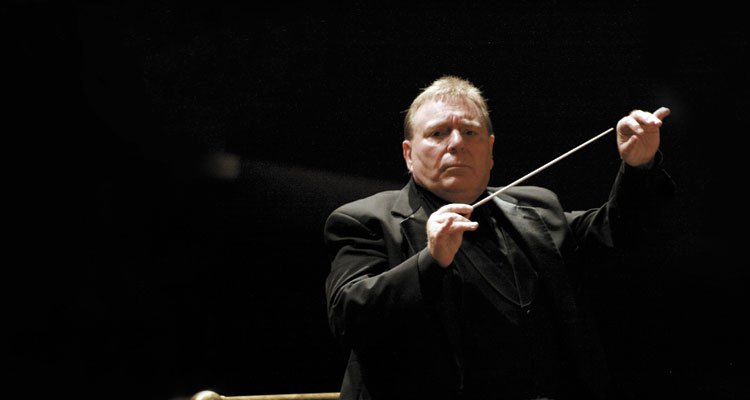
   The ensemble dancing, choreographed by Michael Lawrence Akers, exudes a tribal intensity that oozes, at times, an almost comical sensuality if not outright lascivious glee. And the superb live orchestra conducted by Steve Parsons is equally invigorating. 

   At the end of his painful and cathartic odyssey, Cliff, on his journey back to America, pens the first words of his elusive novel: "There was a cabaret, and there was a master of ceremonies ... and there was a city called Berlin, in a country called Germany ... and it was the end of the world.”  

   With a Kit Kat paddy whack, give the folks a bone, to chew the meat on their way home. Willkommen. Welcome to 1933 Berlin or, if you will, to here and now.

    CABARET, (for mature audiences only) at Canton Players Guild Theatre, 1001 Market Avenue N., Canton, Ohio / THROUGH APRIL 15, 2017 / Shows Friday and Saturday at 8 p.m., Sunday at 2 p.m. / Single Tickets: $27; 17 and younger, $19; Seniors $24 – additional performance on Saturday, April 15 at 2 p.m. / available at 330-453-7617, or  www.playersguildtheatre.com 

   PHOTOS, by Micheal Lawrence Akers, from top: 1.Sarah Marie Young as Sally Bowles / 2. Matthew Heppe and Sarah Marie Young / 3. Olivia Wimberly as Emcee / 4. Wendy Schanz and Ralph Cooley / 5. Ensemble / 6. graphite drawing by me

Wednesday, March 29, 2017

Dazzling Liszt and Rossini Treasures, and a Berwald Gem


  Dazzling Liszt and Rossini Treasures, and a Luminous Berwald Gem

By Tom Wachunas

     The March 25 program by the Canton Symphony Orchestra, titled “Beethoven and His Contemporaries,” began with the Overture and Turkish March, the most often performed sections from the incidental music that Beethoven composed in 1811 for a play called Die Ruinen Von Athen (The Ruins of Athens). Absent from the music is the darker expressivity of strings we hear in many of the composer’s later works. Instead, the wind instruments, particularly the wistful and sprightly oboe soloing in the overture themes, are the reigning voices. The ensemble was equally vivacious in its playing of the familiar Turkish March, evoking a palpable air of adventure. 

   It is that same venturesome energy that reigned throughout the riveting performance of Franz Berwald’s Symphony No. 3 in C Major, Sinfonie singuliére, composed in 1845. This work, like the remaining two on the program – Liszt’s Les Préludes (1848) and Rossini’s Overture To William Tell (1829) - was composed after Beethoven’s death. Singular indeed, with three movements rather than the traditional four, Berwald’s lavishly Romantic masterpiece seems to have taken a cue from Beethoven’s organic style of creating an atmosphere via “tone painting,” and had all the feel of a slowly unfolding journey. Amidst constant thematic ebbs and flows, there is the equipoise of Beethovian stϋrm und drang and poignant contemplation. The playfulness between strings and woodwinds is a remarkable display of Berwald’s unarguable giftedness as both orchestrator and arranger.

   So it is surprising that this symphony – a personal favorite of Maestro Gerhard Zimmermann, as he explained in his introductory comments – is so rarely performed live. A man on a mission, Zimmermann was determined to show us that his passion for this oft-neglected work was not misplaced. The orchestra responded in kind. Brilliant in its detailed articulation of intricate colors and textures throughout, the ensemble was particularly gripping and fearless during the finale – a grand, outward spiraling of jubilant lyricism that clearly elated the audience.

   The second half of the evening was even more exciting, beginning with Liszt’s famous symphonic poem, Les Préludes. Zimmermann was further relishing his role of raconteur as he introduced the work with a story of Beethoven’s meeting with an eleven year-old Franz Liszt. After the young pianist played the first movement of Beethoven’s Piano Concerto No.1, the Master was moved to say, “You go on ahead. You are one of the lucky ones! It will be your destiny to bring joy and delight to many people and that is the greatest happiness one can achieve".

   As if taking that prophetic declaration to heart, the orchestra proceeded to “go on ahead” and dazzle us with an enchanting embodiment of Liszt’s orchestral poetry. Following the lush “moods of spring and love,” as Liszt called the first section, and the “storms of life” described in the second, the third section featured lilting phrases passed from harp to the oboe, then on to the clarinet and flute. It was a truly mesmerizing “peaceful idyll” that set the stage for the explosive, militant finale. Herein was a protracted, very loud burst of triumphal brass, the likes of which I’ve never heard from this ensemble, and one gratefully received with a boisterous standing ovation.

   An invigorated Zimmermann the storyteller addressed the audience once more, now to remind us that Beethoven was not blessed with a bubbly personality, much less a bevy of real  friends. Introducing Rossini’s Overture to William Tell, he related Beethoven’s assessment of the Italian’s ouvre on the occasion of their meeting in Vienna. While the ailing German stated that he was familiar with Rossini’s opera seria (serious opera) works, he was apparently dismissive, saying, “…Opera seria is ill-suited to the Italians. You do not know how to deal with real drama.” Ouch. This was no way to win friends.

   Had he lived just a few more years, perhaps Beethoven would have appreciated just how serious Rossini could be. As it is, this Rossini work ranks as his longest and most sparkling achievement in the realm of operatic overtures. It has become a practically universal meme for dawn, storm, bucolic peace, and martial heroism. And who could forget its association with a certain masked equestrian avenger? Here, the orchestra played with electrifying vigor. From the reverential sweetness of cellos ushering in the sunrise and the swirling woodwinds and strings calling forth the violent brassy storm, to that iconic English horn announcing calm, and the unforgettable trumpet alarm and ensuing gallop, the entire performance was a breathtaking exposition of orchestral virtuosity. 
  
 It was during the second standing ovation on this evening that Beethoven’s words to Liszt took on new relevance. We, the audience, were the lucky ones, happy witnesses to the aural sublimity that is the Canton Symphony Orchestra.

Monday, March 20, 2017

Variable Degrees of Refinement


 Variable Degrees of Refinement

By Tom Wachunas

“…I thought that I heard you laughing / I thought that I heard you sing /
I think I thought I saw you try / Every whisper / Of every waking hour /
I'm choosing my confessions…”  - lyrics from “Losing My Religion” by R.E.M.

   EXHIBIT: VISIONS Art Exhibition – Celebrating 20 Years / works by the Canton Artists League, THROUGH APRIL 16, 2017 at Canton Museum of Art, 1001 Market Avenue North, Canton, Ohio / 330.453.7666

    For those viewers with a hardy appetite for traditional renderings in landscape/floral, portraiture/figural, and still life genres, this exhibit of 75 works by 40 local artists from the Canton Artists League (CAL) is sure to satisfy. Viewed as a whole, you might think of it as an eclectic concert program by a polyphonic choir. CAL has always demonstrated a democratic embrace of both professionals and amateurs, with seasoned, trained performers (often of a conservative ilk) rubbing frames, as it were, with less accomplished, though free-spirited practitioners. So it’s not surprising that in a group show of this magnitude we can encounter some distinctly off-key (or “pitchy,” as a voice coach would say) voices. More on this later.  
  
   In the course of 25 years of viewing Canton-area artists, I was sure I’d seen far too many quaint scenes from nature crafted in watercolor – an especially popular medium in these parts. But then along comes Hilda Sikora, here with her simply exquisite The Journey Home, and I swallow my hubris with a humbling but grateful gulp. And for that matter, still life works such as Five Heirloom Tomatoes, by Sharon Frank Mazgaj, or Copper and Pears, by Nan Rearick, (both painted in oil, I think – can’t be sure, as none of the artists here provide any info as to medium, which is an unfortunate omission on their part), are impressive exercises in tangible lusciousness.

   Similarly in the realm of traditional subject matter, the paintings by Frank Dale and other artists he has trained in the Flemish method (there are several present for this occasion) are arresting if only for their pristine, glass-like surfaces. Yet for all their technical prowess and sheer prettiness, they nonetheless come off a bit like so many anachronistic bromides.

    So while the many conventionally handsome representations here of things we routinely call lovely or tender are certainly nothing to sneer at, there are pieces on this diverse program that resonate in more compelling ways. I’m referring to the relatively more abstract works. Residing in less formulaic or predictable aesthetic terrain, some of them still exhibit a brand of palatable preciousness in execution as they straddle borders between the furious and the finessed, the raw and the refined. In that regard, check out the paintings by Isabel Zaldivar and Lynn Weinstein, or the prints by Anna Rather and Nancy Saulnier.

   Which brings me back to the aforementioned “off-key” selections. For example, The Virgin of the Lilies, by Christine Wyatt Williams, is a stunning enough homage to Classical elegance and religiosity – a literally iconic application of Frank Dale’s “Old Masters” technique. But then something urgent and uncanny transpires when looking at the painting called Mother and Child, by Ileana Mihalteanu Saru, mounted very close by. It’s as if a cacophonous screech is shattering the calm of a gentle aria. Saru’s brushy slashes and smudges are unabashedly crude, but unflinchingly honest. Vive la différence. The proximity of her roughness to Williams’ studied serenity provides one of the most memorably tense, indeed theatrical passages in this ambitious concert of local talents.

   PHOTOS, from top: 1. Five Heirloom Tomatoes, by Sharon Frank Mazgaj / 2. Jazz, by Nancy Saulnier / 3. Iceberg Ahead, by Lynn Weinstein / 4.  Tropic of Columbus, by Nancy Michel / 5. The Journey Home, by Hilda Sikora / 6. Crashing and Receding, by Anna Rather / 7. The Virgin of the Lilies,  by Christine Wyatt Williams     

Monday, March 13, 2017

Once upon an app, with bated breath...


Once upon an app,  with bated breath…

By Tom Wachunas

   “…Each piece is like a page from a book, only neither the beginning of the story nor the ending is always clear. Some of the stories are obvious; some are hidden a little deeper. Like a good adventure story, we wait with bated breath as we turn the page and continue reading.”  - Michael Weiss

    “We are entering the Age of Integration! ...The digital artist is the vehicle to that kind of cultural change. We are the first generation of this new breed and we will most surely be remembered...for we bring a quake of expression and technique that makes the art world very uncomfortable and that is as it should be. “ – Gene Hirsch

    “Art is, now, mainly a form of thinking.”  – Susan Sontag

   “Fine art is knowledge made visible.”  - Gustave Courbet

   EXHIBIT: Whimsical Worlds of Wonder by Michael Weiss / Studio M exhibition at the Massillon Museum, THROUGH APRIL 2, 2017 / 121 Lincoln Way East (Ohio Route 172) in downtown Massillon / 330-833-4061 / Viewing hours: Tuesday through Saturday 9:30am - 5:00pm, Sunday 2:00pm - 5:00pm   www.michaelweiss.carbonmade.com    www.massillonmuseum.org

   Full disclosure: What you are about to read is rooted in unabashed self-plagiarism. I’ve copied and pasted much of the content, while tweaking a few phrases here and there, from a review I wrote back in January, 2014, of an exhibit of Michael Weiss’s work (interestingly enough under the same title as this current show at Massillon Museum) at Malone University’s McFadden Gallery. Here’s a link, in case you’re interested:    http://artwach.blogspot.com/2014/01/once-upon-time.html 
 
   More full disclosure. I’m doing this because even though I have nothing substantially new to add to what I wrote three years ago about Weiss’s pictorial content or methodology, I still think this current exhibit is  fascinating enough to merit our continuing attentions. That said, it has prompted some additional considerations along conceptual lines, which I’ll elaborate a bit more at the end of this post.

 Meanwhile, Michael Weiss lists all the works here as “digital illustrations,” and collectively they exude an epic air – as in a sweeping, ongoing narrative. Call it a representational saga spanning love and longing, loss and discovery, desire and fulfillment. Aside from the facile digital wizardry evident in these images, they amply demonstrate that Weiss is a mesmerizing storyteller.

   His pictures are enchanted scenarios that found their beginnings in book titles and quotes, song lyrics, and even movie taglines. But then, somewhere in the artist’s fertile imagination, such snippets of inspiration (sometimes identifiable enough by their titles) seem to have taken flight into unexpected dimensions. They range from delightfully narcotic, eerily tranquil dreamscapes (that occasionally bring to mind the paintings of surrealists Salvador Dali or Rene Magritte) to more lyrical meditations on the mystical. Yet even at their most haunting or strange, these visions still reside in the comfortable neighborhood of the familiar and accessible.

    Weiss has mastered a digital technique that gives his surfaces a stressed, aged look that can convey a sense of timelessness. The characters that populate his locales – rendered as if seen through scratched glass - might well represent actual individuals and situations from his life. But they could just as well have something in common with our circumstances, caught as we might be in the misty thrall our own dreams and journeys. That’s the universal allure of stories. All of us have them, and telling them is but one of the traditional functions of “representational art” that continues to this day in our culture.

   Is this, then, what we mean by illustration?  If so, must the visual art about our stories be necessarily limited to mimetic transcriptions (albeit with some quirky stylistic embellishments) of tangible reality? Seeing Weiss’s pieces gathered here was a déjà vu experience, to be sure. It made me wonder. Two or three years from now, will his work have the same overall look? Or will he have outgrown his dependable (though certainly intriguing) image-making formula into something even more compelling while still true to the stories he wants to tell? I wait with bated breath.

   PHOTOS, from top: 1. Roots / 2. The Keeper/ 3. The Island was Never in the Same Place Again / 4. Out for a Walk