Wednesday, March 27, 2019

A Circuitous Path to Haydn's Mass in Time of War


 A Circuitous Path to Haydn’s Mass in Time of War

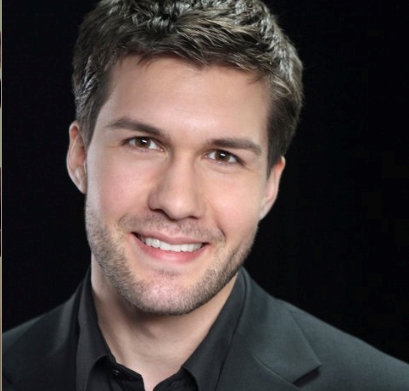
Matthew Jenkins Jaroszewicz

Dr. Britt Cooper

Canton Symphony Chorus

Soprano Heather Phillips

Mezzo-Soprano Sandra Ross

Tenor Tim Culver

Baritone Michael Roemer


By Tom Wachunas

   It would seem that the timing of the March 23 MasterWorks  concert from the Canton Symphony Orchestra (CSO) – a few weeks into Lent -  was no accident. If the mission of the program was to leave the audience awed enough to ponder and savor heavenly matters, it was ultimately accomplished with glorious panache. But the road to get there was paved with strange intentions.

   The evening began on a decidedly funereal note with the Leopold Stokowski transcription of Henry Purcell’s Dido’s Lament. Purcell’s 1688 chamber opera, Dido and Aeneas, was based on Book IV of Virgil's Aeneid, and tells of Dido, Queen of Carthage, her love for for the Trojan hero Aeneas, and her suicidal despair when he abandons her to return to Italy. Dido’s Lament was named for the story’s final aria, among the most arresting moments in all of opera: “When I am laid in earth, may my wrongs create no trouble in thy breast. Remember me but forget my fate.”

   Stokowski once offered this observation to fellow conductors: “We have to try to understand and give to the listening public what we consider was in the mind of the composer.”  CSO Assistant Conductor Matthew Jenkins Jaroszewicz clearly took that sage advice to heart.  He let Stokowski’s sublime arrangement for lush-sounding strings do all the singing and  directed his attentive ensemble through slowly unfolding, nuanced layers of the bittersweet melody, beautifully augmented by poignant soloing from principal cellist, Brian Klickman. 
 
   One might reasonably hope that after experiencing the searing emotionality of the lament, the next program selection would offer something less morose, more uplifting, or at least gracefully optimistic. Instead, Igor Stravinsky’s suite of eight pieces from his music for the ballet, Pulcinella, was an oddly frenetic interlude in this context. After drinking so deeply of Dido’s pathos, Pulcinella, even in its most pleasant moments, had all the grace of a hiccup. The fault, if it could be called one, was neither in the orchestra’s adventurous performance nor in the brisk conducting by Jaroszewicz.

   In 1920, Stravinsky was so impassioned by his study of the charming simplicity he encountered in assorted choral and instrumental scores by 18th-century Italian composer Giovanni Pergolesi (and a handful of other forgotten composers) that he re-worked them for his ballet score. If the music sounds like  a somewhat scatterbrained exercise in thematic meandering, it’s only because it reflects the dual nature of Pulcinella himself. He was a comic hero who became a stock character in 17th century Neapolitan commedia dell’arte productions. Depending on a given scenario, he could be a crass, silly bumpkin, or a proud, witty thief, and often both.

    As it was, the orchestra pranced through all the suite’s spasmodic twists of harmonies, textures, and rhythms in a spirit of giddy abandon. Fortunately, the intermission afforded enough distance from such worldly wanderings so we could more calmly prepare for passage into loftier realms. After all, we were about to be taken to church.

   Responding to a complaint that the ending of one of his Masses was too frolicsome, Franz Joseph Haydn said, “I cannot write them otherwise. When I think of God, my heart is so full of joy that the notes gush forth as from a fountain. Since God has given me a joyful heart, He will forgive me for having served Him joyfully.” Haydn composed Missa in Tempore Belli (Mass in Time of War) in the autumn of 1796, a notably unjoyful time. France and Austria were at war, and Napolean’s army was advancing toward Vienna.

   Under the commanding baton of Dr. Britt Cooper, Director of the Canton Symphony Chorus, singers and orchestra delivered a reverent, brilliantly paced account of this dramatic work that was wholly magnificent. Cooper’s meticulous sensitivity to the ebb and flow of expressive aural dynamics in the work – when to be loud, when to be soft - was impeccable.  The vocal quartet – featuring the crystalline luster of soprano Heather Phillips, the steady warmth of mezzo-soprano Sandra Ross, the radiance of tenor Tim Culver, and the robust sonority of baritone Michael Roemer - was spellbinding. Additionally, the large chorus was itself an auditory phenomenon of astonishing clarity and power, and always in perfect balance with the orchestra.

   While Haydn effectively implied some of the wartime angst of his day in the final part of this Mass, the Agnus Dei (Lamb of God), the stunning music eventually soars above the morbid. Yes, it began with the chorus voicing an urgent, somber plea for mercy amid the encroaching sounds of timpani sounding out an ominous march. But bright trumpet fanfares signal hope, and the chorus begins to voice divine assurance in a dance-like rhythm, repeating dona nobis pacem. Grant us peace. Haydn’s notes, gushing forth as from a fountain. In the end, not only God, but we too, had been served joyfully.

Wednesday, March 20, 2019

Dialects of Glossolalia?


 Dialects of Glossolalia?

Andrea Belag, "Cave" - oil on wood

Joanne Freeman, "Covers Cobalt" - etching

Deborah Freedman, "Oaks and Oleandrs #1" - acrylic on polyester

Joseph Haske, "Asterion #5" - acrylic on canvas

Mark Saltz, Untitled - oil, resin, pigment on linen

Marjorie VanDyke, "Ides #1" - oil on canvas


By Tom Wachunas

   “Abstract art is a fundamental distrust of the theory of reality concocted by the eyes.” – Robert Brault

   “One of the most striking of abstract art’s appearances is her nakedness, an art stripped bare.” – Robert Motherwell

   “Abstract literally means to draw from or separate. In this sense every artist is abstract... a realistic or non-objective approach makes no difference. The result is what counts.”  - Richard Diebenkorn

EXHIBIT: Painters Prints / works by Andrea Belag, Deborah Freedman, Joanne Freeman, Joseph Haske, Mark Saltz, Marjorie VanDyke / at The Lemmon Gallery, located inside the Kent Stark Fine Arts Building, 6000 Frank Avenue, North Canton, Ohio / THROUGH APRIL 6, 2019 / Gallery viewing hours are Monday – Friday 11 a.m. to 5 p.m.

Gallery Talk: April 4, 3:30 p.m. / Artist Reception: April 4, 5–7p.m.

   Aesthetics 101: Two-dimensional art is a language of myriad dialects, both learned and intuited. When we say that an artwork “speaks” to us, we affirm its capacity to take us into some quiet state of perception that resonates with our own experience of existence.  Mindful looking, or listening, if you will, requires slowness, and begins with a surrender, founded upon our intentionality, our willingness to be transported, perhaps even transformed.  What the artist makes becomes all the more compelling when it prompts us, the viewers, to look at our world in a deeper way.

   Now stretch your imagination to consider the possibility that this highly captivating exhibition of abstract prints and paintings by six accomplished New York City-based artists could be a variation of the phenomenon known as glossolalia (glôs-ō-lā- lēə). Here’s the Collins English Dictionary definition of the term: 1. ecstatic or apparently ecstatic utterance of usually unintelligible speechlike sounds, as in a religious assembly, viewed by some as a manifestation of deep religious experience / 2. gift of tongues.  

   Glossolalia, or speaking in tongues, is known in many cultures, most of them ancient. In Christianity, for example, it is regarded as a mystical language coming directly from God, and spontaneously voiced by entranced worshippers. A communing with the divine. To the uninitiated or insensitive, such utterances might well sound like gibberish.

   Similarly, it’s no secret that there are viewers who, in their passing rush to identify the meaning of what they see only with their eyes, consider abstract art, particularly of the non-objective sort, as the strictly proprietary language of artists engaged in iconoclastic nonsense. Those who hold such a dismissive view are probably looking too fast.

   This is certainly not to say that we should consider all artists as either the dispensers of mystical experiences or the sole recipients of cryptic messages from on high. It’s not entirely unreasonable, however, to regard artists such as those presented in this marvelously diversified fete of abstractions as somehow akin to shamans, or spirit-catchers. Think of them in a larger sense as curious gatherers of energies and essences. As all visual artists do, the individuals in this exhibit have made symbols, allegories, metaphors. These particular artists, however, have channeled their personal encounters with corporeal realities and personal memories into varying dialects that depart from conventional naturalism to arrive at intriguing if not transcendent distillations.

   Back to mindful looking for a moment. Yes, there is a substantial presence of rarefied quirkiness in this exhibit. So slow down. Let your intuition do the deciphering. Here’s where the ordinary and the predictable get wrecked. It’s viewer-friendly glossolalia.  

Thursday, March 7, 2019

Giggles and Grace from the Canton Symphony Orchestra


Giggles and Grace from the Canton Symphony Orchestra


By Tom Wachunas

   Imagine watching a very fine orchestra as it begins to perform the stirring final movement of a symphony. After only a few bars, the violinists abruptly stop playing and start to tune their instruments. Oh, the indignity! Nervous giggles ripple through the audience as the conductor, clearly mortified by such a cacophonous interruption, glares incredulously at his rude ensemble before continuing.

   Such a scenario was actually one of several intentional breaches of symphonic protocol that transpired during the first work on the March 2 program from the Canton Symphony Orchestra at Umstattd Hall. Franz Joseph Hayden’s  Symphony No. 60, Il Distrato (The Distracted, or The Addle-Minded), was an expansion of the incidental music that he originally composed in 1774 for a comedy  by Jean François Regnard about a man named Leandre, who was so absent-minded that he nearly forgot to attend his own wedding.

    Accordingly, Haydn penned a particularly quirky symphony in six movements, rather than the “normal” four, presented here in keeping with the overall theme of the evening, “Humor in Music.”  In mischievously breaking with his own standards of composition that would earn him the epithet, “Father of the Symphony,” Haydn convincingly transformed the orchestra into the persona of the blundering Leandre, creating a work  replete with goofy non-sequiturs and “wrong” music.  For example, the first movement is disrupted by the inclusion of a direct quote from a completely different symphony (No. 45, “The Farewell”). The lovely processional wedding tune in the second movement collides with the sounds of a passing marching band. Elsewhere there are jarring key changes, obtrusive fanfares, and snippets of seemingly random folk tunes. Other than Maestro Gerhardt Zimmermann’s brief lapse into mock horror at the infamous tuning break in the final movement, he and his valiant ensemble navigated this impish farce with delightfully straight-faced, business-as-usual aplomb.

   And now for something completely different: The Carnival of the Animals, scored for two pianos and orchestra in 1886 by Camille Saint-Saëns, and subtitled “a grand zoological fantasy.” Zimmermann took a seat to the side of the orchestra in his role of narrator. Matthew Jenkins Jaroszewicz, CSO Assistant Conductor, directed this tantalizing tour of the animal kingdom from the podium with infectious zeal. The exhilarating narration, full of whimsical puns and tongue-twisting rhymes, was based on the the comical verses that Ogden Nash wrote in 1949 to accompany each of the work’s 14 movements.  Zimmermann inserted some hilarious improvisations of his own, including a much anticipated singing passage that was more a raucous chant than an actual song, though nonetheless endearing in its throaty chutzpah.

   Meanwhile, guest pianist Jeffrey Biegel and CSO pianist Dean Zhang significantly augmented the onomatopoeic brilliance of the music so magnificently articulated by the ensemble.  With enchanting keyboard magic, they deftly conjured everything from roaring lions, leaping kangaroos, and fish in glittering water, to galloping donkeys, fluttering birds, and even piano students practicing monotonous scale exercises.

  An old show business maxim admonishes, “Leave them laughing when they go.” So it was on this occasion with the final work on the program, Jacques Ibert’s wild, six-movement romp from 1929, Divertissement. The orchestra was clearly very eager to embark on this frenetic excursion into musical eclecticism that included some mild skewering of works by Jacques Offenbach and Johann Strauss Jr. It all ended with a zany evocation of a Keystone Kops chase scene, complete with Maestro Zimmermann frantically blowing a police whistle. And so yes, mission accomplished. We left laughing.

  Something else, however, lingered long after. Despite all of the evening’s boisterous, tweak-your-nose humor, I was left remembering, thankfully, the evening’s most quietly compelling performance – the second (Andante) movement of Dmitri Shostakovitch’s Concerto for Piano and Orchestra No.2, composed for his son, Maxim, in 1957.

   Before the intermission, pianist Jeffrey Biegel had regaled us with an utterly stunning rendition of the work, which is for the most part playful, untroubled, and certainly witty. Biegel’s virtuosity was breathtaking, his technique in executing the work’s lavish trills and muscular arpeggiations clear, concise, and thrilling throughout. But it’s the second movement – ironically, anything but humorous – that lifted me up into Biegel’s mesmerizing state of impassioned lyricism. In this protracted moment of emotive profundity, his playing was a warm, slow pouring out of rapturous grace.    

Tuesday, February 26, 2019

An Odyssey Penetrating the Primal


 An Odyssey Penetrating the Primal

The Optimist

Beluga Caviar

A Good Hand

Old Soles

Lyin' Eyes

Life on Mars


By Tom Wachunas

   "The act of drawing is intrinsic to all visual art disciplines, and to  express oneself through the basic mediums of paper and pencil or paint and canvas is to penetrate an interior, subconscious  existence - one that is uncharted, yet rich in creative discovery."
  
-Patricia Zinsmeister Parker /  http://www.pzparker.net/

    The Cave Paintings Suite / Old Soles Suite – works by Patricia Zinsmeister Parker / THROUGH MARCH 29, 2019 / ART AT THE SCHOOLHOUSE , 2026 Murray Hill Road, Cleveland, Ohio,  Suite 108 / 216-721-1507 / Viewing hours: Wednesday and Thursday 4pm -  7pm; Friday 4pm - 8pm; Saturday 12pm - 8pm; Sunday 1 - 5pm / Please call ahead to make sure gallery is open.


   I can’t think of a place more well-appointed for exhibiting the prolific wildness of Patricia Zinsmeister Parker than Art At The School House. What used to be an elementary school building in Cleveland’s Little Italy – Murray Hill School, built in 1907 and closed in 1978 – was renovated and re-purposed in the late 1980s, and some of the classrooms have since become art galleries.

   The vintage look and atmosphere of the building’s exterior and its internal rooms have been essentially preserved, and the spacious gallery displaying Parker’s mixed media paintings from the past few years provides an intriguingly apropos context for appreciating their visceral physicality and childlike swagger. Here, then, is a richly varied materiality enlivened by Parker’s intrepid and audacious spirit which can be alternately funny, mysterious, alluring, and elusive.
   
   On one long wall of the gallery are 29 small (12” x 12”) paintings on wood panels, some generously sprinkled with glitter or textured with colored splotches of carved joint compound. Collectively, these pieces from Parker’s “Cave Paintings” series have all the disarming abandon and charming snap-crackle-pop of a children’s art show. I certainly don’t mean this in any way to be disparaging or dismissive. Beneath all of Parker’s constant tides of iconographic eclecticism and stylistic eccentricities is an irresistible undertow. A primal force. It’s the same ineffable force that feeds the impulse in a child to literally draw out, or excavate, pure intuition. And it’s this same force that Parker boldly taps in making a deliberately imperfect art. It’s nevertheless a sublime art, celebrating refined un-refinement with often jarring rawness.
    
    While some of her Cave Paintings incorporate actual objects or found images, she doesn’t paint slick pictures of objective realities so much as she paints attitudes. Parker has constructed an intensely personal, codified language, if you will, describing her odyssey into the primal with more adjectives and adverbs than nouns. They may be enigmatic or whimsical symbols of remembered situations or conversations, but they’re not so cryptic that they altogether prohibit us from construing a narrative, or imagining our own dialogue with them.

   Dialogue of a kind is an active ingredient in the considerably larger canvases from her “Old Soles” series. She wields a wry and witty brush in these scuffed-up wanderings into ambiguous mindscapes, articulating a frenetic graffiti of the subconscious. Awkward, blotchy shapes and scratched words and phrases mingle together, floating within, or disappearing behind loosely painted fields of pale color. Scribbled figures step forward, then back into a mist. Life on Mars indeed. Are these nervous expeditions through unfamiliar terrains without a map?  Is this a psyche deciding whether to reveal itself or run away? 
  
    Insightful and inciteful, Patricia Zinsmeister Parker makes art that wags a sassy finger in your face and rattles your sense of “finished” aesthetic decorum. She’s a painter seriously engaged in mindful play, and in the process, not too unlike that gleefully recalcitrant kid who refuses to color inside the lines. 

Tuesday, February 19, 2019

Rising From the Wreckage

(l. to r.) Dominic Iudiciani, Keitha Brown, Michael Burke


Devin Pfeiffer, Hallie Walker

(l. to r.) Dominic Iudiciani, Jonathan Tisevich, Keitha Brown

Keitha Brown

Hallie Walker
Rising From the Wreckage

By Tom Wachunas

“…Who's crazy? The one who's uncured, or maybe the one who's endured; the one who has treatments or the one who just lives with the pain …”  - lyrics by Brian Yorkey

   Could any of us ever experience hope without first floundering in despair? Or savor light without first tasting darkness? These vexing questions and their complex repercussions resonate throughout Next to Normal, the Pulitzer Prize-winning musical from 2010, with book and lyrics by Brian Yorkey, and music by Tom Kitt. In addressing them, this deeply engaging story about the damaging effects of a mother’s mental illness on her whole family goes far beyond any gentle tugging at your heartstrings. It relentlessly yanks and twists them into torturous knots.

   For this Players Guild production, Jonathan Tisevich set a very high bar for himself in his double-duty as director and actor. But he and his marvelously adroit cast members have successfully joined to become a dynamic entity. Together, they’re an astonishing family unit in their own right, telling their anguished tale with practically operatic force driven by a profound and riveting emotional intensity. They elevate Yorkey’s lyrics – which on paper might at times seem like so much cosmetic sentimentality – to a level of startling sincerity. In the process, this courageous ensemble becomes  empathy itself.   
  
   The tiered set designed by Joshua Erichsen, with its pixelated images of a house and faces on panels floating in the air, is a stark metaphor for the fractured and dysfunctional life that has crippled the Goodman family for 16 years. The ever-shifting moods and textures of that life are sharply reflected in the music, which is an edgy pastiche of idioms flavored with rock, countrified melancholy, and dreamy lyricism, and all superbly articulated by the small yet plush-sounding live orchestra conducted by Steve Parsons.

    Diana Goodman is a housewife diagnosed with severe bipolar disorder, and hopelessly imprisoned in a futile cycle of pain management protocols including an arsenal of drugs, psychoanalysis, and even electro-convulsion treatments. The merciless progression of her disease is presented in such a way that we don’t learn about the shattering event that first triggered it until after we’ve witnessed a number of scenes with her husband Dan (Jonathan Tisevich); daughter Natalie (Hallie Walker) and her boyfriend Henry (Devin Pfeiffer); son Gabe (Dominic Iudiciani); and Doctors Madden and Fine (Michael Burke).

   In the daunting central role of Diana, Keitha Brown is an uncanny embodiment of unmitigated dramatic power in the way she makes us vicarious participants in her brokenness. With exceptionally powerful singing, she draws us deep into her character’s ravaged psyche, her wounded heart, her ferocious groping for a reality that makes some sense. Yet, caught as she is in her numbing inward spiral of tears and terror, she’s not so far gone that she can’t see or dream of a reasonable way to reclaim her real self, as she reflects with tender and urgent yearning in the song, “I Miss the Mountains.”

   To her role of daughter Natalie, Hallie Walker brings a poignant credibility that’s equal parts sardonic and sad. There’s an understandably bittersweet yet visceral quality to her singing when she reveals Natalie’s feelings of invisibility, as if her life at home has been erased. Her heart has been hardened by too many years of neglect from her mother who has been in turn pathologically focused on her other child, Gabe. In that role, Dominic Iudiciani is intriguingly stealthy and lithe as he basks in his mother’s constant fawning, particularly when he sings “I’m Alive” with all the panache of a rock’n’roll star.

   Meanwhie, Natalie begins to find some solace in her slow-growing affection for her charismatic stoner classmate, Henry. Devin Pfeiffer conveys all of Henry’s amiable quirkiness with delightful aplomb.

   And then there are Diana’s two therapists. Both are played by Michael Burke, who deftly conveys their frustrating if not humorous cluelessness in identifying the precise nature of the affliction they’re trying to treat. 
 
    Jonathan Tisevich can be both breathtaking and downright excruciating to watch in his role of Diana’s beleaguered husband, Dan. In the face of Diana’s   terrible pain, he’s an eminently loyal man trying to be an anchor, a present haven of comfort and “normalcy” – whatever that means anymore. It’s a sublime depth of passion and searing expressivity that Tisevich brings to this production. As the husband and wife in this story appear to be inexorably fading away from each other, Dan’s desperate grasping at even the faintest glimmer of hope for recovery grows all the more. That’s the point of the show’s thunderous, ebullient closing number, simply called “Light” – the stuff that untangles our knotted heartstrings. 
  
   And what I most want to know is, where on earth, if on earth at all, did Tisevich go to get that singing voice of his? I’d like to visit there for a while, then come back and sing to you all about it.
   
All photos courtesy of Players Guild Theatre

NEXT TO NORMAL, at Canton’s Players Guild Theatre on the William G. Fry stage, 1001 Market Avenue N., Canton, through March 3rd / performances on Fridays & Saturdays @ 8:00 PM, Sundays @ 2:00 PM, as well as Thursday, February 28th at 8:00 PM.  Tickets are $32.00 for adults, $29.00 for seniors and $25.00 for those 17 and younger / purchase online at www.playersguildtheatre.com  or at the Players Guild Box Office, located in the Great Court of the Cultural Center for the Arts, 1001 Market Ave N. Tickets may also be purchased by phone: 330-453-7617.

Wednesday, February 13, 2019

Intriguiled and Mystiflighted

"Jade Cove Study I" (wax, hydrocal on plywood)


"Cyanophyta" (wax, hydrocal on plywood)

"Succulent with Red Color Field" (glass)

"Waste Line 9" (with Nathan Gorgen - acrylic, plywood, hydrocal)

"Waste Line 2" (with Nathan Gorgen - acrylic, wax, hydrocal, plywood)

"Queueing" detail

"Queueing" detail
Intriguiled and Mystiflighted

By Tom Wachunas

queue /kyo͞o/  (noun):  1.  a line or sequence of people or vehicles awaiting their turn to be attended to or to proceed. / 2. in computing, a list of data items, commands, etc., stored so as to be retrievable in a definite order, usually the order of insertion.

   EXHIBIT: Queuing -   a solo exhibition featuring works and site specific installation by Molly Burke / at The Lemmon Gallery, located inside the Kent Stark Fine Arts Building, 6000 Frank Avenue, North Canton, Ohio / THROUGH MARCH 2, 2019 / Gallery viewing hours are Monday – Friday 11 a.m. to 5 p.m. 


    The title of this post is comprised of two neologisms, offered in the playful spirit of Lewis Carroll’s “portmanteau” words (from Through the Looking-Glass), wherein parts of multiple words are blended to form a new one. This  exhibit of works by Columbus-based Molly Burke left me, as Humpty Dumpty might have said to Alice, intriguiled and mystflighted – intrigued and beguiled, mystified and delighted, all at once.

   A casual stroll through the exhibit could possibly lead you to think you were looking at a group show of three or four different artists. It’s true that I often walk into many artists’ solo shows with an expectation of encountering works that have a certain unified rhyme and reason about them, or some sort of consistency in visual vocabulary and syntax - an apparent “style” in one medium. But expectations can undermine our willingness to look deeper and be surprised. After all, where is it written that an artist must by definition be constrained to one method or iconography? 

   To better appreciate the diverse trajectories of materiality in Burke’s art, the statement on her web site is illuminating. There she tells us, “I observe details and the repetition that occurs in our environment.  My artwork focuses on magnifying these observations.  I am not specifically geared toward one media, although I am attracted to materials that have a certain amount of transparency, and change states from fluid to solid.”

   Transparency and solidified liquids. Glass, wax, and hydrocal (a type of plaster) are Burke’s raw materials, transformed into various series of objects. They’re comfortably-scaled enough to imagine cradling them in your hands, or running your fingers along their lusciously tactile surfaces. They suggest, as opposed to depict or illustrate, any number of things or phenomena  including, perhaps, fertilized ova, microorganisms, or clusters of succulent plant growths emerging from viscous pools of wavy fluid.

   Several pieces in the exhibit are collaborative projects between Burke and her husband, Nathan Gorgen. These fascinating, somewhat enigmatic works from their "Waste Line" series have the look of abstract puzzles in the process of being assembled with leftover materials from their respective creative practices – wax and hydrocal from her, wood and painted faux surfaces from him. A union of rescued remnants given new life.

   And then there’s Burke’s compelling installation from which the title of this exhibit is derived - “Queuing.” Within this gallery there is a rectangular island of sorts in the form of a very long, wide, four-walled column. Burke opted to hang no art on the walls of this structural element of the gallery space. But the sheer expanse of all that white emptiness serves quite effectively as a frame, drawing your eyes downward to the floor. There at your feet you can see the entire island surrounded by a group of white hydrocal forms cast from balloons. 

   Some are intact, some slightly cracked, others broken into pieces like shattered chinaware. Yet there they are, a population lined up on the floor at the base of that monolithic column, as if in a procession, or standing at attention. At one point there’s a gap in the line. On the wall above the gap there’s a shelf. On it are three of the balloon forms – one red, one white, one blue. They don’t sit on the shelf so much as delicately hover there, seemingly poised on a sliver of air. Metaphor for a fragile democracy? I imagined that if I blew on these cryptic balloons hard enough, they’d fall over.

   Then I imagined a perplexed Alice asking Humpty Dumpty, “What are these?!” The jolly egg - himself no stranger to being toppled - smiles a wry smile and says, “Why, they’re cryptaloons, of course.”

Friday, February 1, 2019

A Haunting Metamorphosen and Radiant Eroica from the Canton Symphony Orchestra


A Haunting Metamorphosen and Radiant Eroica from the Canton Symphony Orchestra

By Tom Wachunas

“Don't only practice your art, but force your way into its secrets; art deserves that, for it and knowledge can raise man to the Divine.”
- Ludwig van Beethoven

   With Beethoven as the primary focal point, the three works on the January 26 Canton Symphony Orchestra (CSO) MasterWorks program made for a beautiful and bittersweet journey through interconnected musical and dramatic ideas. The final destination was an altogether magnificent event - Beethoven’s ground-breaking third symphony, Eroica.

   This intriguing journey began with Beethoven’s finale to Die Geschöpfe Des Prometheus (The Creatures Of Prometheus), a two-act ballet choreographed by Salvatore Viganò, and first performed on March 28, 1801, at the Vienna Hofburg Theater. Though a few critics of the day complained that Beethoven’s music was so intellectually demanding that it overwhelmed the dancing, the public reception was more forgiving, and the ballet enjoyed reasonable success with 28 performances over the next two seasons.

   Viganò called the work a “heroic allegorical” drama which presented the mythological figure of Prometheus as a noble figure, driven to eradicate the ignorance of human beings. With the help of Apollo and the Muses, he leads two statues into experiencing human passions, gifting them with philosophy, knowledge of the arts, and morals.

   The form for Beethoven’s finale for the ballet was drawn from the Anglaise, a popular social dance at the time. The dominant musical idea resonates with prophetic significance. In it we hear a bass line and melodic theme that was clearly a lasting favorite for Beethoven. He would use it again in his set of 12 Contredances and in his Opus 35 piano variations (Eroica Variations), both written in 1802, and to a far greater extent in the finale of his third symphony, written 1803-1804. Here, the ensemble articulated all of the breezy, bright energy of the ballet finale with scintillating clarity.

   After this brief but cheerful moment of light, we were transported to considerably more challenging, darker realms. In introducing the next piece, Richard Strauss’s Metamorphosen, composed in 1945, Maestro Gerhardt Zimmermann offered astute and sensitive observations about the resonant themes that linked all three works on the program. In particular, he characterized the mournful solemnity of the Strauss work - strikingly similar to the musical ideas in Beethoven’s iconic funeral march in the second movement of Eroica - as an expression of unmitigated hopelessness. In the final measures of the work, Strauss directly quoted the Beethoven theme, and made a notation on the score, “In Memoriam!” While those words can certainly be regarded as grateful acknowledgement of Beethoven’s influence, it’s also fair to see them as implacable grief over the wartime collapse of an entire culture. When he heard that the Weimar and Munich opera houses had been destroyed, he wrote, “…it was the greatest catastrophe of my life; there is no possible consolation, and, at my age, no hope.” 

   Have you ever stood on an ocean shore long enough to be hypnotized by the waves coming in? Were you awed by the power of their constant slow swelling in the distance, their majestic cresting, and the whooshing sound of their falling close to you, over and over again, for what seemed like an eternity? In some ways, listening to the orchestra navigate this profoundly moving work was like that.

   The work was scored for 23 solo strings. On this occasion, all but the five cello players performed while standing – a haunting evocation of a funeral procession. Strauss’s music is an immersive masterpiece of intricate chromaticism and dense, complex textures, all intertwined and washing over us in seemingly relentless, alternating cycles of dramatic crescendos countered with passages of contemplative quiet. The ensemble’s reading was intensely reverential and cohesive, and yet another riveting demonstration of the virtuosic prowess and enthralling sonority of the CSO strings.

   That same remarkable depth of artistry was all the more multiplied and intensified throughout the entire orchestra in its radiant performance of Eroica. Now it felt to me as if all of this evening’s ideas, colors, and moods had congealed so completely that the orchestra under Zimmermann’s impassioned baton became a compelling embodiment of Beethoven himself, if such a thing were possible.

    I’m speaking of Beethoven the man, finding hope and joy even in the tragedy of his encroaching deafness and political tumult of his day; of Beethoven the Promethean visionary drawn to the idea of bringing enlightenment to humanity; of Beethoven the romantic revolutionary who changed the face of symphonic music. That an orchestra could so beautifully impart such considerations, as this one did, is a heroic act in itself.